
In this occasional series I’ll share information and advice on a range of careers-related opportunities. Today I’m doing a brief overview of the wonderful world of apprenticeships!

How do apprenticeships work?
Apprenticeships are a full-time (minimum 30 hours per week) paid job with training: you’ll be an employee, but you’ll also be doing industry-recognised qualifications alongside your job to help you progress in your career. They can be a great way to enter the workplace as a young person, but can also be useful for retraining if you’re looking to change careers.
You’ll often take industry-specific (trade) qualifications, sometimes with English and maths alongside. You’ll spend most of your time (about 80%) on the job and the rest of the time (about 20%) training, with support from a college, university or training provider. Your training time may be on a regular schedule (for example, one day per week) or in less regular, but larger chunks (often known as ‘block release’).
Apprenticeships can be done at different levels depending on the requirements of the role. Most apprenticeships are at level 2 (equivalent to GCSEs at grades 4+) or level 3 (equivalent to A Levels). There are also a more limited number of higher and degree apprenticeships at levels 4-6 (see below). It may be possible to progress from one level of apprenticeship to another. For example, after completing a level 2 apprenticeship you may have the option to progress onto a level 3 apprenticeship (although you may need to switch employers).
They normally take 1 – 5 years to complete, depending on the type and level of apprenticeship (the harder the apprenticeship, the longer it takes). Assessment methods vary and may include projects or coursework, practicals or on-the-job assessments, tests and presentations.
Apprentices have their own minimum wage for those who are under 19 or in the first year of their apprenticeship, which is currently £7.55 per hour (2025 rate), but many employers pay their apprentices more than the minimum wage (especially for higher and degree apprenticeships). See here for more information and to check the current rates.
Foundation apprenticeships are aimed primarily at young people and are rolling out in a variety of sectors (such as digital, engineering, construction and health and social care) from 2025. They are at level 2 and last for at least eight months.
Flexi-job apprenticeships allow apprentices to complete placements (short-term contracts) at a number of different organisations – or hosts – which are normally organised by an agency. These are particularly useful in industries where employers are reluctant or unable to offer a standard full-length apprenticeship. You can search for flexi-job apprenticeships in the usual way (see below), or directly by contacting a relevant flexi-job apprenticeship agency.
You may also see school-leaver programmes advertised, usually by larger organisations. In some cases these are traditional apprenticeship schemes, but in other instances they may be work-based training programmes that aren’t registered apprenticeships. Check the qualification details carefully to make sure you’d be trained appropriately and receive industry-recognised qualifications (not just something that is only relevant to one employer).
Higher and degree apprenticeships
If you have – or will have – level 3 qualifications (such as A Levels or a T level) then you can also look at higher or degree apprenticeships.
A higher apprenticeship is a full-time combined package of work and study for industry-recognised higher education qualifications. You may spend time at a university or other training provider, or all your qualifications could be done through the workplace. These are usually offered at levels 4 or 5.
A degree apprenticeship involves you studying with a university for the training part of your apprenticeship, usually doing a level 6 (regular degree) qualification, or sometimes a level 5 (foundation degree) qualification. Following the completion of a level 6 degree apprenticeship you would be a graduate (in the same way you would be if you’d gone to university directly).
Degree apprenticeships at level 7 (masters level) are available in certain professions as an entry route for graduates (who have already completed a level 6 degree, either as an apprentice or through the standard university route).
You may also see sponsored degree programmes advertised by employers and their partner universities. This is where you do your degree as usual at university, but work for your sponsor employer during placements, the holidays and after graduation. You will normally receive financial compensation, either in the form of a wage or by the employer paying for your tuition fees – or sometimes both!
Who do apprenticeships suit?
As an apprenticeship is a job, they suit people who are ready to enter the workplace and no longer want to be a full-time student. An apprenticeship is not an easy option and can be very competitive; you have to be reliable, keen, hardworking and motivated.
The grades you’ll need vary depending on what sort of apprenticeship you’re applying for. For some opportunities you will need specific grades in specific subjects. As a rule, foundation apprenticeships don’t require any particular grades, whereas other level 2 apprenticeships will normally ask for some GCSEs. For level 3 apprenticeships you normally need GCSEs at grade 4 or above. For higher and degree apprenticeships you normally need qualifications at level 3 (e.g. A levels, T level etc).
Five ways to find an apprenticeship
Finding an apprenticeship isn’t like applying to college or university – it’s job hunting. You need to be persistent, employable and lucky! There are many methods to finding an apprenticeship and the more of them you try the more likely you are to succeed…
- Use specific websites to look for apprenticeship opportunities (see below).
- You can also use normal job-hunting websites (like Indeed or Totaljobs) to search for apprenticeship vacancies.
- Use your personal network (family and friends) to keep an eye out for opportunities for you and introduce you to any relevant contacts (people working in the sector or organisation you’re interested in). You can also develop your contacts by going on work experience/shadowing placements or by volunteering.
- See if there are any apprenticeship fairs taking place in your local area – this can be a great way to get access to employers.
- Check out company/organisation websites in the sector you’re interested in to see who offers what. You can contact likely employers directly with a CV and covering letter (normally via email) if they don’t have details about opportunities online.
Apprenticeship vacancy websites
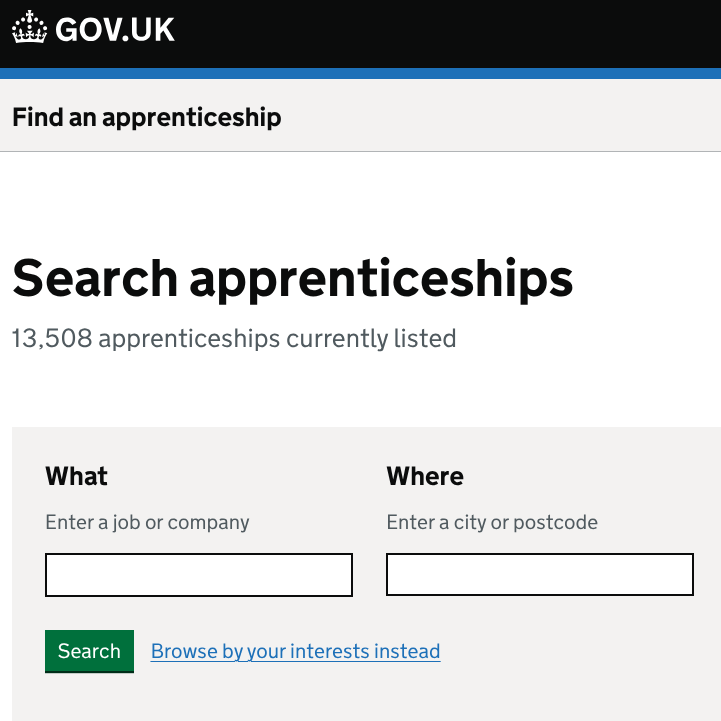
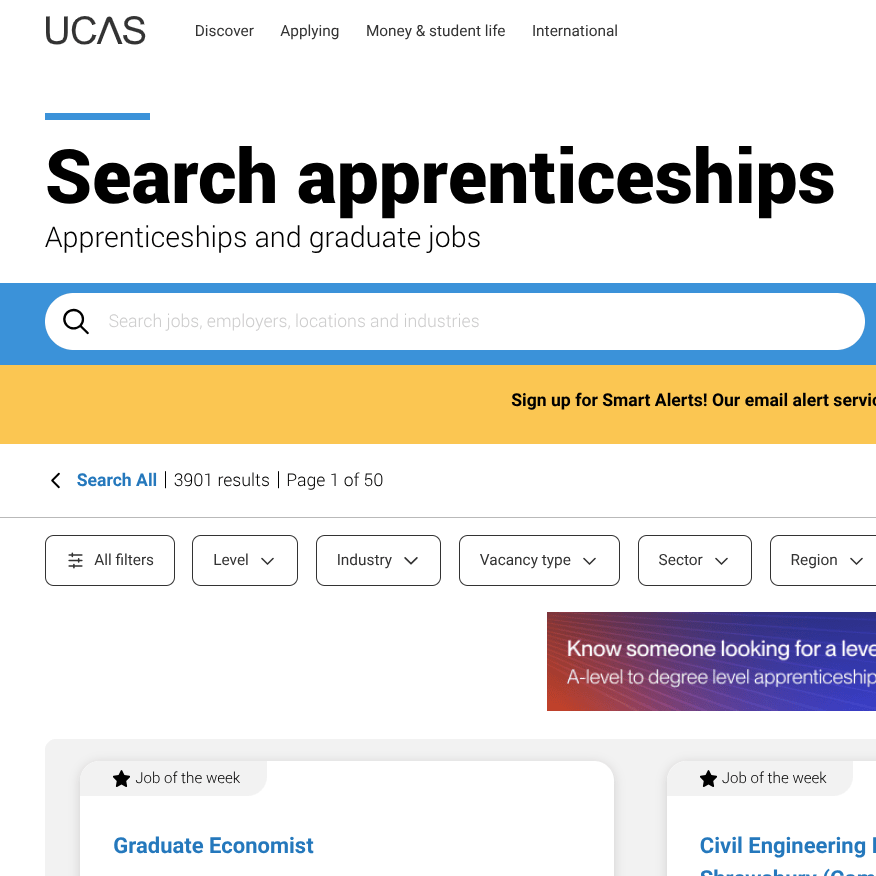
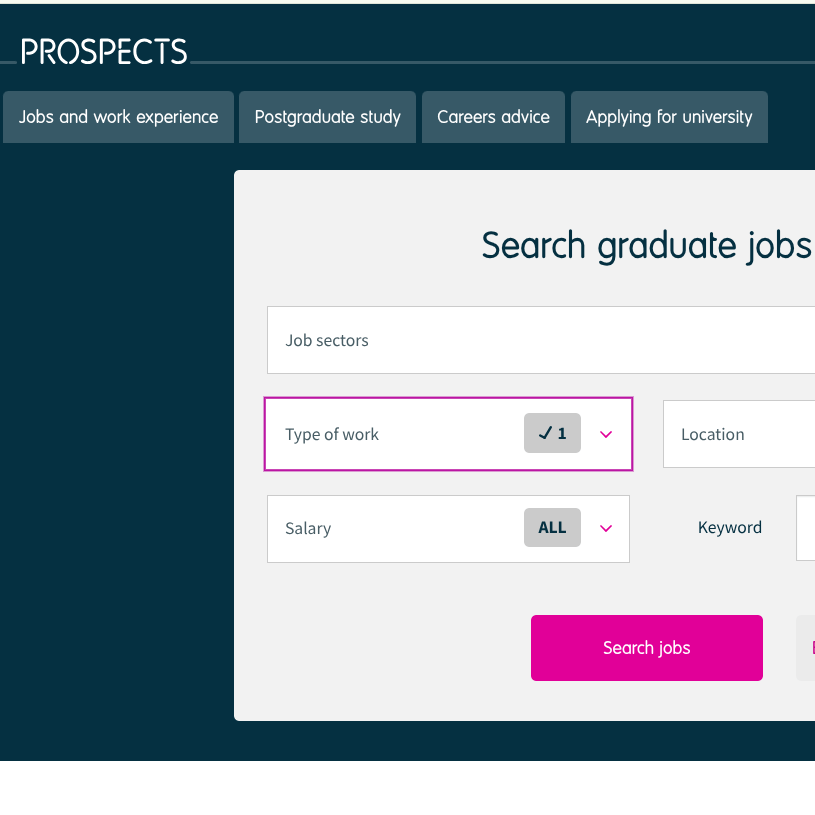
There are a lot of these around! Here are the ones I use most frequently, some are suitable for all levels of apprenticeships, whereas others focus more on higher and degree apprenticeships. Have a look and see which you prefer…





Top tips for success
Work hard to get the best grades you can to increase your competitiveness. Work experience (even in a not-particularly-relevant part-time job) also helps. For some sectors and roles, volunteering can provide you with essential experience.
Remember that some companies recruit quite far in advance of the start of the apprenticeship (particularly for degree apprenticeships), so don’t leave it until the last minute. Start looking soon to ensure your best chance of success! If you’re in Year 11 or Year 13, I recommend you start your apprenticeship hunt in October so you have access to a greater range of opportunities.
Try to be flexible about what you’re looking for to increase your chances of success. If there’s not much in your local area, can you move home or commute? If you’re struggling to find a degree apprenticeship, are there level 3 apprenticeships in the same sector you could take as a first step? If your preferred employer isn’t recruiting apprentices this year, are there any similar organisations you could apply to instead? If you can’t find any apprenticeships in a particular profession, can you apply for related job roles with relevant training that will allow you to transition to your chosen career later on?
Register with colleges/training providers who offer apprenticeship training (but be aware you won’t have an apprenticeship until you have an employer): look online for colleges/training providers in your area. For degree apprenticeships, look at universities that partner with employers to offer sponsored degree schemes or degree apprenticeships and contact any other training providers that work with the industry you’re interested in.
Make sure you develop a good CV and prepare well for any interviews. Job hunting is a skill; the better you are at it the more likely you are to succeed!
Finally, think of a back-up plan in case you can’t find an apprenticeship this time around. You can apply to as many things as you like, so it’s a good idea to apply for a college or university course as an alternative option. You may find it easier to get an apprenticeship once you have additional qualifications and experience.
Good luck!
 Polly Wiggins Careers Services
Leave a comment